

30
三月What Key Programming Specialist Experts Would Like You To Know
Unlocking the Future: The Essential Role of a Key Programming Specialist
In the early days of the automobile industry, automobile security referred simple mechanical engineering. A physically special piece of metal was cut to match the pins within a lock cylinder, and as long as the grooves lined up, the engine would roar to life. However, as lorry theft ended up being more sophisticated, manufacturers were forced to innovate. This advancement birthed the transponder key, the remote fob, and the proximity "clever" key. With these improvements, a new profession emerged at the intersection of locksmithing and infotech: the Key Programming Specialist.
A key programming specialist is a highly trained expert who possesses the technical proficiency and specific equipment needed to sync a lorry's onboard computer system with a contemporary key or fob. This role is no longer almost hardware; it has to do with software, encryption, and diagnostic interaction.
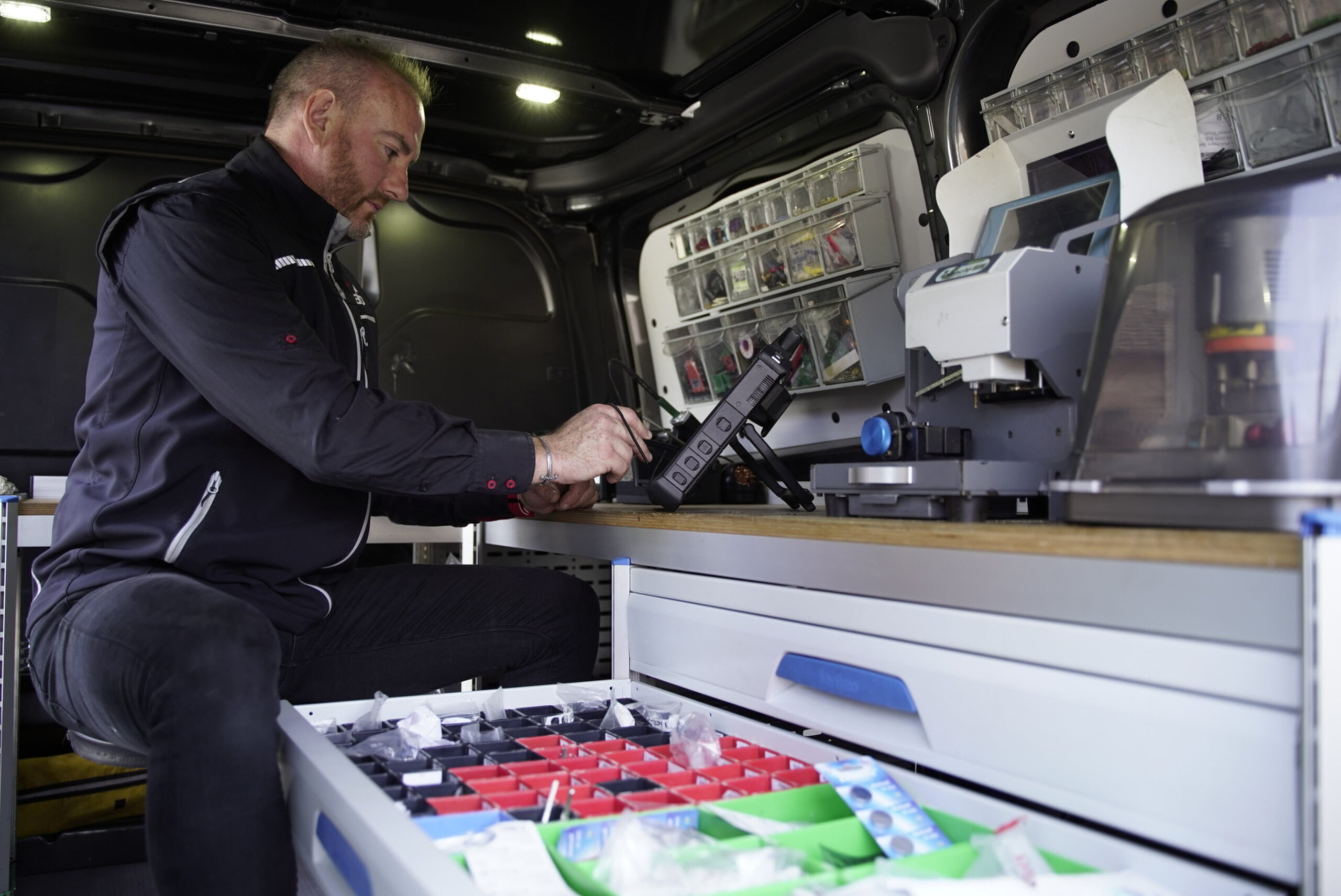
The Evolution of Vehicle Security
To comprehend the value of a key programming expert, one must first understand the innovation inside a modern-day car. Since the late 1990s, a lot of vehicles offered in North America and Europe have been geared up with an immobilizer system. This system acts as an electronic gatekeeper, preventing the engine from beginning unless it receives a specific digital "handshake" from the key.
This handshake is assisted in by a Transponder (Transmitter + Responder) chip embedded in the head of the key. When the key is turned or the "start" button is pressed, the car sends an electronic burst to the key, which then transfers a distinct alphanumeric code back to the car's Engine Control Unit (ECU). If the codes do not match, the car remains a stationary piece of metal.
What Does a Key Programming Specialist Do?
A key programming specialist performs jobs that go far beyond the abilities of a standard hardware store. They are accountable for the entire lifecycle of a lorry's electronic gain access to system.
1. New Key Origination
When a vehicle owner loses all their secrets, they face a "total loss" situation. An expert needs to use diagnostic tools to user interface with the car's OBD-II (On-Board Diagnostics) port, extract the required security pin codes, and program a brand-new key into the system's memory.
2. Key Duplication
For numerous contemporary cars, merely copying the physical blade is useless. The expert must clone the existing transponder information or include a brand-new distinct ID to the car's internal "whitelist" of licensed secrets.
3. Remote and Fob Synchronization
Smart secrets and "Push-to-Start" fobs require complicated pairing. The professional makes sure that functions like remote start, trunk release, and distance unlocking are all adjusted properly to the particular lorry.
4. System Resets and Security Wiping
If a car is stolen and recovered, or if a set of keys is lost in a public location, the specialist can "wipe" the car's memory. This makes sure that the old, missing keys will no longer begin the automobile, providing assurance to the owner.
Comparative Analysis: Traditional Locksmith vs. Key Programming Specialist
While there is some overlap, the tools and knowledge base needed for these functions differ considerably.
| Feature | Traditional Locksmith | Key Programming Specialist |
|---|---|---|
| Main Focus | Mechanical locks and physical secrets | Electronic security and software application syncing |
| Core Toolset | Files, picks, and manual cutters | OBD-II scanners, EEPROM programmers, laptop computer software |
| Knowledge Base | Physics of lock cylinders | Coding, file encryption, and vehicle electronic devices |
| Key Type | Metal "blade" keys | Transponder, Smart Fobs, Proximity Keys |
| Threat Factor | Minimal (Broken keys) | High (Potential for ECU "bricking" or data loss) |
The Technology and Tools of the Trade
Key programming professionals utilize a suite of modern tools that allow them to communicate with a car's computer. The complexity of these tools often explains why professional services are needed rather than DIY attempts.
Specialized Equipment Includes:
- OBD-II Programming Tablets: Handheld computer systems that plug into the car's diagnostic port to read pin codes and program key data.
- EEPROM Programmers: Used for "bench work" where the professional should eliminate a circuit board from the car and check out the data straight from the memory chip (typical in high-end European brand names like BMW and Audi).
- Frequency Testers: Devices utilized to make sure the remote fob is broadcasting on the right MHz frequency (315MHz or 433MHz).
- Laser Key Cutters: CNC-controlled makers that cut "high-security" or "sidewinder" keys to factory requirements with micrometer precision.
Why Professional Expertise is Necessary
The "Do-It-Yourself" movement has reached the automotive world, with many online sellers offering inexpensive fobs and "easy-programming" dongles. However, lorry owners ought to exercise caution. Modern car security is created to be difficult to bypass to prevent theft.
If an untrained individual attempts to set a key utilizing substandard tools, they risk "bricking" the automobile. Bricking is a term utilized when the ECU's software application becomes damaged, rendering the car totally inoperable. Fixing a damaged ECU typically costs countless dollars and needs an overall replacement of the car's computer system. A specialist reduces this danger by utilizing certified software application and keeping a deep understanding of the particular procedures for different makes and designs.
Key Types and Difficulty Levels
Various manufacturers employ different levels of security. The following table highlights the complexity included in different key types.
| Key Type | Technology | Programming Strategy | Complexity Level |
|---|---|---|---|
| Standard Transponder | RFID Chip | OBD-II Programming | Moderate |
| Remote Integrated Key | RFID + RKE (Remote) | Dual-level Syncing | Moderate |
| Distance/ Smart Key | LF/RF Passive Entry | Sequence-based Pairing | High |
| European High-Security | Rolling Codes/ Encrypted | EEPROM/ Dealer Logins | Important |
The Step-by-Step Programming Process
When a key programming specialist gets here on-site, they follow a strenuous protocol to ensure the security of the car remains intact.
- Verification: The specialist validates the ownership of the lorry through VIN checks and registration to ensure they are not unintentionally assisting in a theft.
- Diagnostic Connection: The professional links a diagnostic tool to the OBD-II port to inspect for any existing faults in the immobilizer system.
- Code Extraction: They draw out the unique Security PIN or "Seed Code" needed by the maker to get access to the programming menu.
- Key Preparation: If a physical blade is needed, the professional cuts the key using a laser-cutting device based on the lorry's particular key code.
- Data Writing: The expert "introduces" the new key to the car's computer system, composing the brand-new transponder ID to the lorry's memory.
- Testing: The professional carries out a full diagnostic sweep to guarantee the engine begins, the remote buttons function, and the distance sensing units work from the correct ranges.
The function of the key programming professional is vital in a period where vehicles are basically "computer systems on wheels." As automobile technology continues to advance towards biometric entry and smartphone-based secrets, these experts will continue to adapt, evolving from locksmith professionals into cybersecurity experts for the road. For the typical automobile owner, the comfort provided by a professional expert is important, ensuring that the modern security features designed to secure their investment are working precisely as planned.
Regularly Asked Questions (FAQ)
1. Can a key programming professional program a key for any car?
A lot of specialists can manage about 90% of vehicles on the roadway. However, specific high-end luxury brand names (such as newer Mercedes-Benz or Volvo designs) have "closed" security systems that may require a check out to a qualified dealer.
2. Is it less expensive to go to a specialist or a dealership?
In a lot of cases, a key programming professional is considerably more economical than a car dealership. Specialists have lower overhead and can often provide mobile services, whereas a dealership usually requires the car to be pulled to their location.
3. For how long does the programming process take?
The time varies by automobile. A basic Ford or Toyota might take only 15 to 30 minutes. Nevertheless, a complex European automobile that needs EEPROM work could take several hours.
4. If I purchase a key fob online, will a specialist program it for me?
Lots of experts will program "customer-supplied" secrets, however they typically supply no service warranty on the work. Because lots of online secrets are cheap clones with malfunctioning chips, there is a threat the programming will stop working. It is generally suggested to acquire the key from the specialist straight.
5. What information do I need to provide to an expert?
To provide an accurate quote and service, an expert will need the Car Programming Near Me (check out this blog post via Shaylamullins)'s Year, Make, Model, and VIN (Vehicle Identification Number). They will likewise need to see evidence of ownership and a legitimate ID.

Reviews